4 Substack Alternatives That Skip the 10% Fee (2026, Tested)
· 10 min read
Disclosure: YourSolopreneurKit.com earns commissions from affiliate links at no extra cost to you. Beehiiv and Buttondown are affiliate partners. Substack, Ghost and Kit are not.
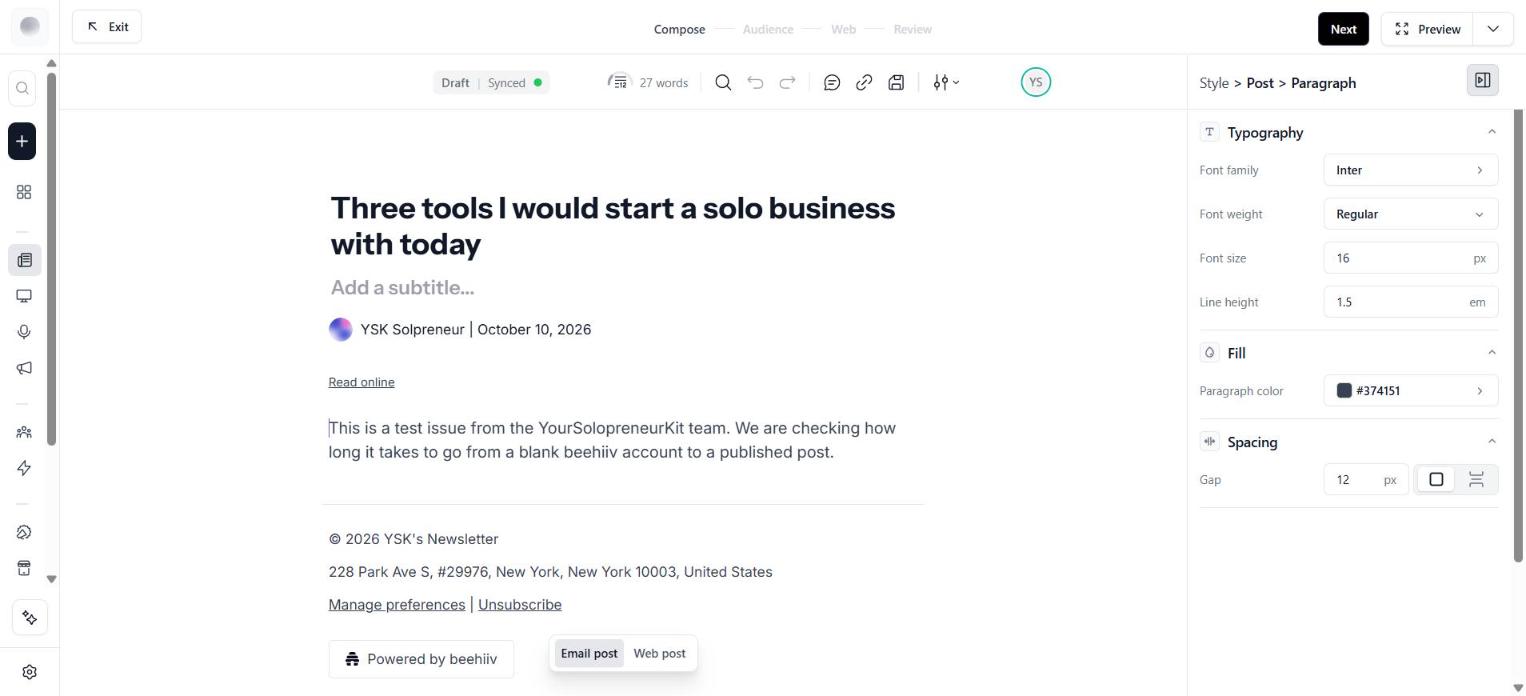
How we tested: We tested Beehiiv in one hands-on session on October 10, 2026. The account was on the 14-day Pro trial that Beehiiv starts for every new signup. The free plan underneath it covers 2,500 subscribers and unlimited sends. We built a publication, wrote a post and published it. We did not open a Substack, Ghost or Kit account for this article. Their sections come from each company's public pricing pages and help docs, checked the same day.
Substack is free until you charge readers. Then it keeps 10% of every paid subscription, on top of Stripe's card fees. At $500 a month in paid subscriptions you hand Substack $50. At $2,000 a month you hand over $200, for the same software you used when you earned nothing. That fee is the reason most writers start searching for Substack alternatives, and it is the lens for this comparison.
The Short Answer
- Growing a newsletter you plan to monetize: Beehiiv. Free to 2,500 subscribers, and its paid plans list a 0% take rate on subscriptions.
- A publication that lives on your own website: Ghost. No free plan, 0% fees from the Publisher tier up.
- Selling products and running email sequences: Kit. Free to 10,000 subscribers, with automations locked on the free plan.
- A plain, quiet newsletter: Buttondown. Free for your first 100 subscribers.
- You rely on Substack's network for readers: stay on Substack.
Start a Beehiiv publication free →
What Substack Charges, in Dollars
Substack's deal is simple. Publishing is free. Free subscribers cost you nothing at any list size. When you switch on paid subscriptions, Substack takes 10% of that revenue and Stripe takes its processing fee as well.
A percentage fee feels small at the start and grows with you. A flat monthly plan works the other way. The table shows the yearly cost of Substack's cut at four revenue levels.
| Paid subscription revenue | Substack's 10% per month | Substack's 10% per year |
|---|---|---|
| $250/month | $25 | $300 |
| $500/month | $50 | $600 |
| $1,000/month | $100 | $1,200 |
| $3,000/month | $300 | $3,600 |
Beehiiv's pricing page listed its first paid plan at $49 a month on annual billing when we checked. Substack's cut passes that number once your paid subscriptions bring in about $490 a month. Below that line Substack is the cheaper home for a paid newsletter. Above it, you pay more every month you grow.
Substack Alternatives Compared
| Platform | Free plan | Entry paid price | Cut of paid subscriptions | Tested hands-on? |
|---|---|---|---|---|
| Substack | Yes, unlimited free subscribers | None | 10% | No, public pages and docs |
| Beehiiv | Yes, 2,500 subscribers, unlimited sends | $49/month, billed yearly | 0% listed on paid plans | Yes, 14-day Pro trial |
| Ghost | No, free trial only | $18/month, billed yearly | 0% from the $29 Publisher plan | No, pricing page |
| Kit | Yes, 10,000 subscribers | $33/month, billed yearly | Fee per transaction on products | No, pricing page |
| Buttondown | Yes, first 100 subscribers | Add-ons from $9/month | None listed | No, pricing page |
Prices come from each vendor's pricing page on October 10, 2026. Stripe's processing fee applies on every platform that takes payments.
Want this table on one page? Get the Substack alternatives comparison cheat sheet, with the fee break-even math included. Free.
No spam. Unsubscribe anytime. Privacy policy.
1. Beehiiv: The Pick for Growth and Paid Subscriptions
Beehiiv is a newsletter platform built by people who worked on Morning Brew. It bundles the editor, a website, a referral program, an ad network and paid subscriptions into one account. For a solo writer leaving Substack, it is the closest match with the fee removed.
What happened when we tested it
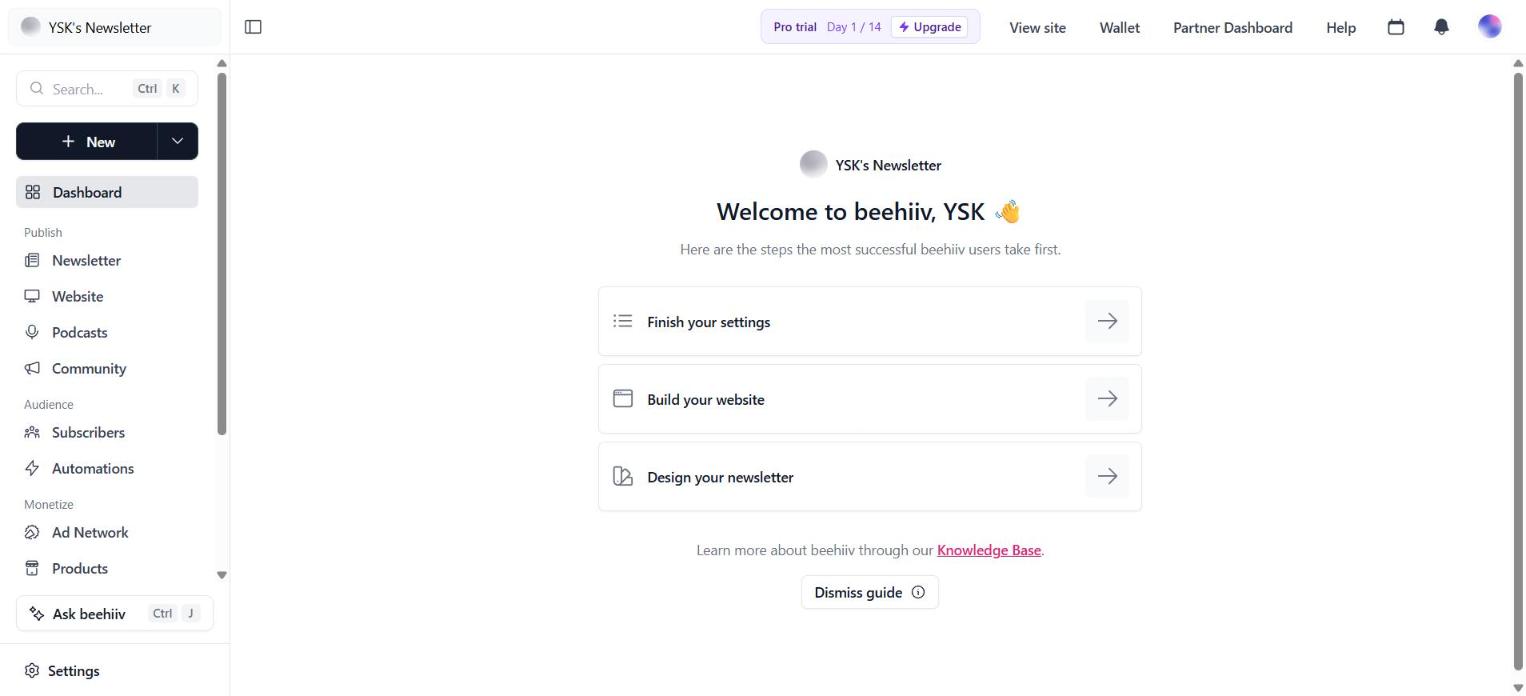
A new Beehiiv account lands on a dashboard with three setup cards: finish your settings, build your website, design your newsletter. A badge at the top read "Pro trial, Day 1 / 14". Beehiiv gives each new account two weeks of Pro features without asking for a card. Keep that in mind during your own trial, because some of what you click in week one belongs to a paid plan.
We clicked New, typed a headline and one paragraph, and walked through the publish steps. From the first click to a live post took under five minutes, and part of that was us learning the editor. No card, no domain setup, no approval wait.

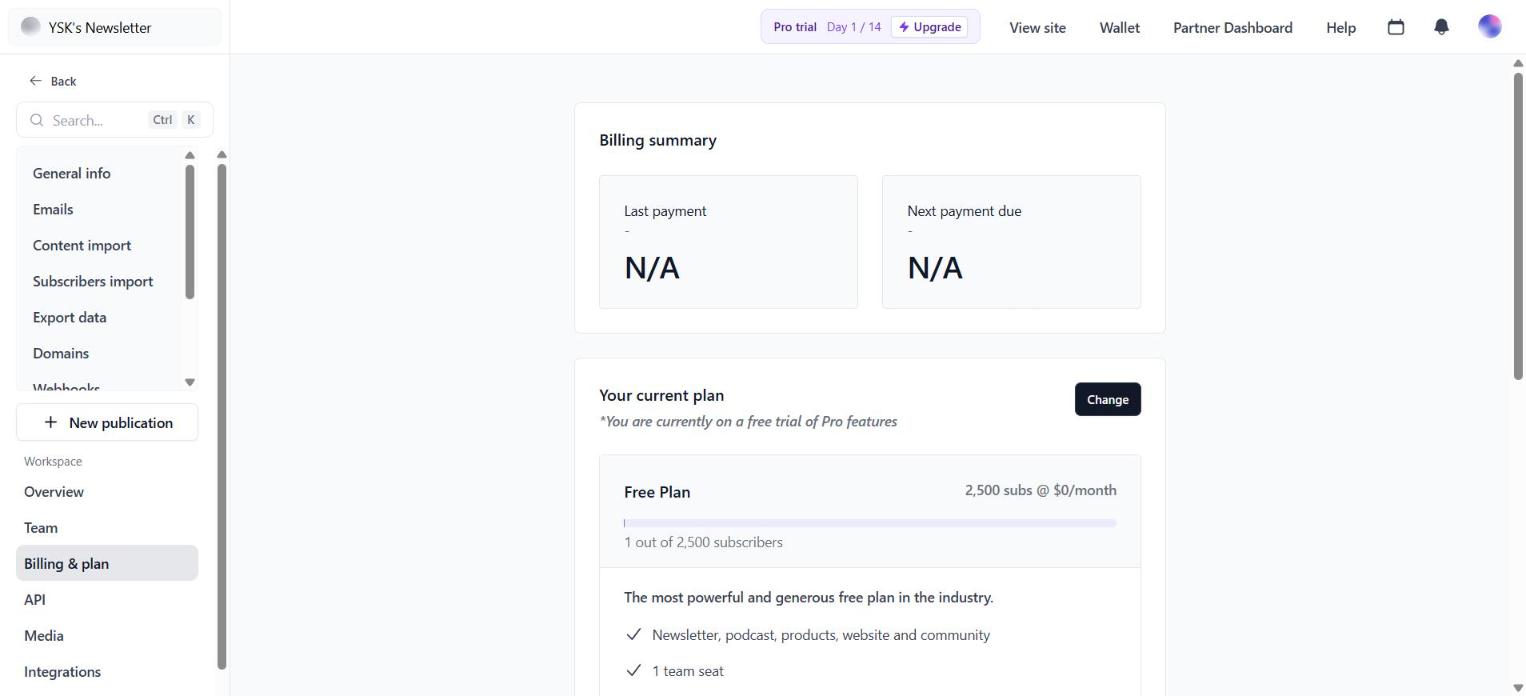
The billing screen showed the plan that remains after the trial: 2,500 subscribers at $0 a month, unlimited email sends, one team seat, one publication and 30 days of analytics.
Friction we hit
- The floating header toolbar covers the first body line. We aimed a click at the body and opened the Web thumbnail popup instead. Clicking lower in the page fixed it.
- The publish button says "Schedule". To publish at once you click Schedule, then choose "Publish now" inside the dialog. It works, and it reads wrong the first time.
- Publishing takes five steps: Compose, Audience, Email, Web, Review. Substack does it in two. Beehiiv's extra steps let you send a post to email only, web only, or both. We chose web only, so no email left the account.
We hit no paywall during the build. That is the trial talking. We did not stay long enough to see which features lock on day 15, so treat the free-plan feature list on Beehiiv's pricing page as the source for that.
Moving your list from Substack
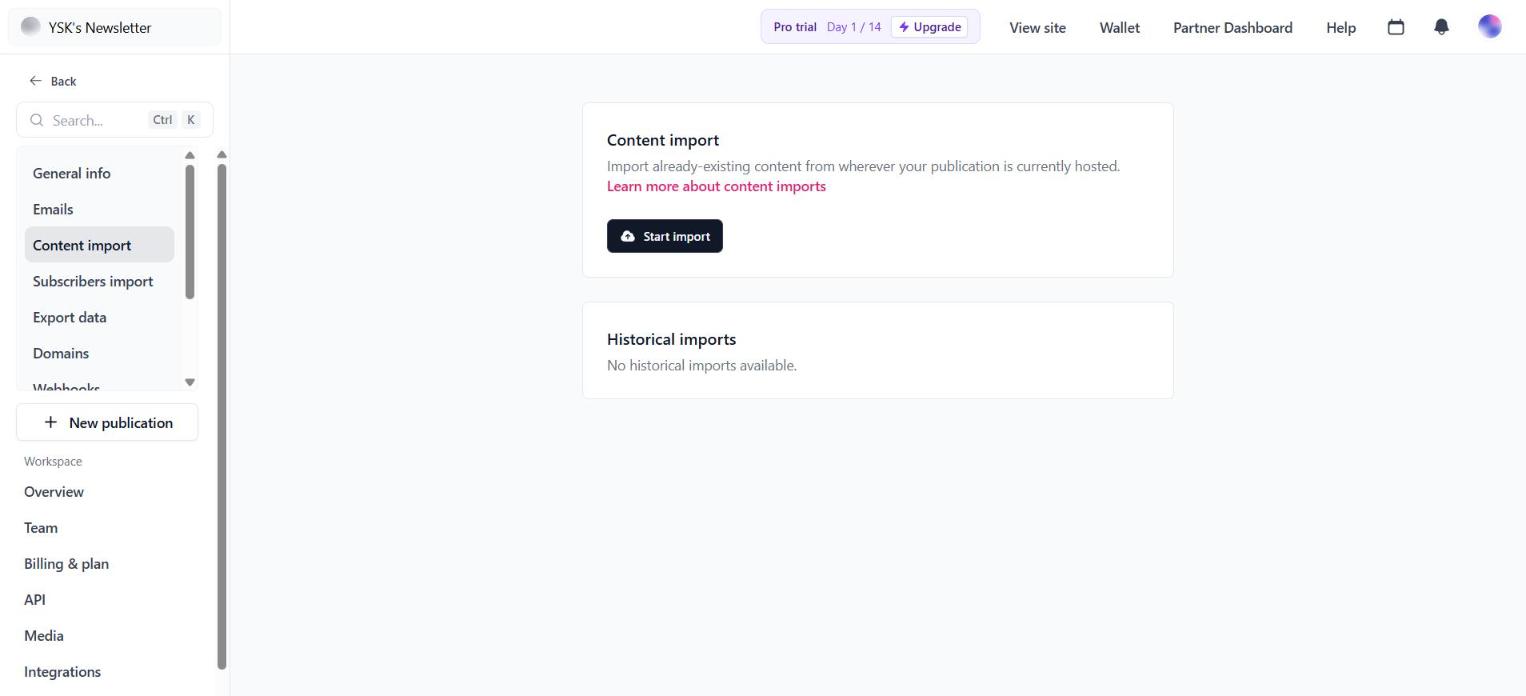
Beehiiv's settings include two import tools: Content import for your old posts, and Subscribers import for your list. We opened both. We did not run them, because we had no Substack publication to export. Substack lets you export your subscriber list as a CSV file from its settings, and your paid subscribers sit in a Stripe account you own, so the billing relationships can move with you.
Choose Beehiiv if: you want referral and ad tools, you plan to charge for subscriptions, and you would pay a flat monthly price over a percentage. Our Beehiiv review and Beehiiv pricing guide cover the plans in detail.
Try Beehiiv free, no card needed →
2. Ghost: Your Publication on Your Own Site
Ghost is open-source publishing software run by a non-profit. You get a full website with memberships and email built in, and you own the whole thing. Writers who care about search traffic and design control pick Ghost over Substack for that reason.
Ghost(Pro), the hosted version, has no free plan. Its pricing page listed Starter at $18 a month on yearly billing with 1,000 members, and paid subscriptions are not part of Starter. The Publisher plan at $29 a month adds them with a 0% transaction fee. You can also host Ghost yourself and pay only for a server, if you are comfortable maintaining one.
Choose Ghost if: your writing should rank on Google and live on a site you control. Skip it if you want a free start or a built-in referral program.
3. Kit: For Writers Who Sell Products
Kit, the company once named ConvertKit, comes from the email marketing side. Its strength is automation: tag a reader when they click, then send a sequence that sells a course or an ebook.
The free plan covers 10,000 subscribers, the largest free tier on this list. The pricing page shows the catch in the comparison table: visual automations and automated email sequences are missing on Free. Those arrive on the Creator plan, listed at $33 a month on yearly billing. Kit charges a fee per transaction on products and subscriptions sold through it.
Choose Kit if: a product pays your bills and the newsletter exists to sell it. For a head-to-head, read Kit vs Beehiiv.
4. Buttondown: The Quiet Option
Buttondown is a small, independent newsletter tool with a Markdown editor and almost no interface to learn. It costs nothing for your first 100 subscribers. Past that, the pricing page lists features as add-ons: $9 a month for paid subscriptions, tagging and analytics, and $29 a month for archives on a custom domain and automations.
Buttondown has no recommendation network and no ad marketplace. You bring your own readers.
Choose Buttondown if: you write for a few hundred people and want software that stays out of the way. Try Buttondown free → or see Beehiiv vs Buttondown.
When Staying on Substack Makes Sense
Substack earns its 10% in one situation: its network sends you subscribers. Recommendations from other writers, the Substack app and Notes all put your work in front of readers who already pay for newsletters. None of the four alternatives has an audience of that size waiting inside the product.
Open your Substack dashboard and check where your subscribers came from. If a large share arrived through Substack's own channels, the fee buys you growth and leaving would cost you readers. If most came from your own social accounts, search or word of mouth, you are paying 10% for an editor and a payment form.
Two more cases for staying: you earn under about $490 a month from subscriptions, or you have no paid tier and no plan for one. Substack costs nothing in both.
How to Switch Without Losing Subscribers
- Export from Substack. Download your subscriber CSV and your post archive from Substack's settings.
- Open the new account on a free plan or trial. Build the publication page and one test post before you import anyone.
- Import the list, then the archive. Beehiiv has a tool for each. Ghost and Kit have importers too.
- Connect the same Stripe account. Your paid subscriptions live in Stripe, so the new platform can pick them up. Ask the new platform's support to confirm the steps for your account before you cancel anything.
- Send one last Substack post that tells readers the next issue comes from a new address, and ask them to add it to their contacts.
- Keep the Substack page live for a month with a link to the new home.
We have not run this migration end to end. The steps follow the export and import tools each platform documents, and step four is the one to double-check with support.
Bottom Line
Substack's 10% is a fair price for an audience and a poor price for software. If your readers come from your own channels and your subscriptions bring in more than about $490 a month, Beehiiv costs less and adds referral and ad tools Substack lacks. We had a post live in under five minutes on a free account, with a 2,500-subscriber free plan waiting after the trial. Writers who want a real website should look at Ghost. Writers who sell products should look at Kit.
Start on Beehiiv's free plan →
Frequently Asked Questions
What is the best free alternative to Substack?
Beehiiv's free plan covers 2,500 subscribers with unlimited sends. Kit's free plan covers 10,000 subscribers and leaves out automations. Buttondown is free for the first 100 subscribers.
Does Beehiiv take a cut of paid subscriptions?
Beehiiv's pricing page lists a 0% take rate on its paid plans. Stripe's processing fee still applies. Substack takes 10% plus Stripe's fee.
Can I move my paid subscribers from Substack?
Yes. Paid subscriptions sit in your own Stripe account, and Substack lets you export your subscriber list as a CSV. Confirm the Stripe connection steps with your new platform's support before you switch.
Is Ghost cheaper than Substack?
It depends on revenue. Ghost's Publisher plan was listed at $29 a month with 0% fees. Substack's 10% passes $29 once paid subscriptions exceed $290 a month.
Did you test all of these tools?
No. We tested Beehiiv hands-on during its 14-day Pro trial on October 10, 2026. Substack, Ghost, Kit and Buttondown are described from their public pricing pages and documentation.
About the Author
The Your SoloPreneur Kit Team — Honest tool reviews, home office guides, and actionable strategies for solopreneurs. Built by a 30-year operations veteran who managed teams across Panama, Central America, and the Caribbean.
Subscribe to The Solopreneur Edge
Get weekly tool reviews, productivity tips, and business strategies delivered to your inbox. Join our growing community of solopreneurs.
Subscribe to Newsletter